


Balancing the Brain: Lessons from Salman Al Farsi and Aisha

A balanced mind is not a mind without tension. It is a mind that knows when to search, when to reason, when to feel, when to remember, and when to surrender to truth.
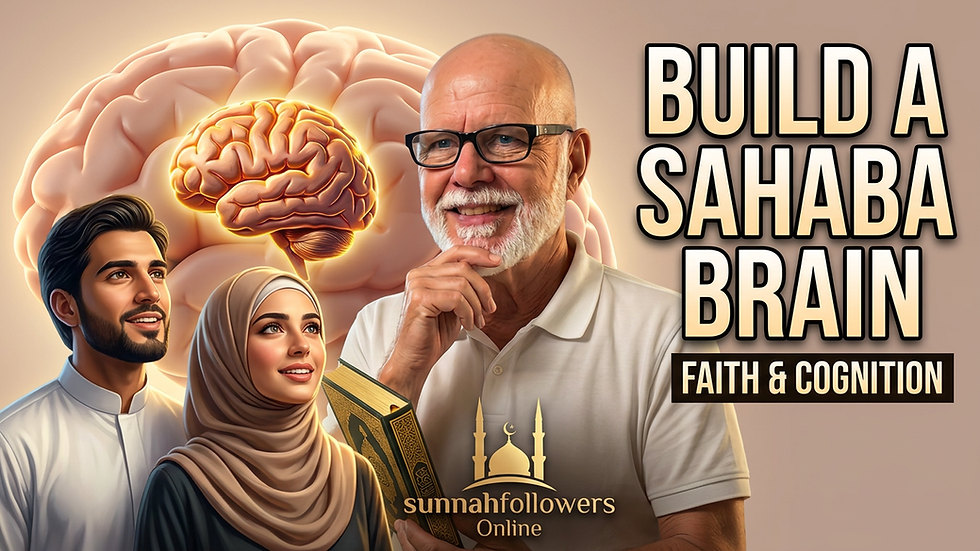
In his lecture on how to balance your brain, Dr. McBride used two remarkable figures from Islamic history to show this idea in a memorable way: Salman Al Farsi and Aisha, the daughter of Abu Bakr and wife of the Prophet Muhammad, peace and blessings be upon him.
The language of “right-brained” and “left-brained” people is often used as a teaching tool. Modern neuroscience is more complex than a simple split between creativity and logic. Still, as a metaphor, it can help us name something real in human life. Some people are driven more by longing, intuition, and meaning. Others seem to lead with memory, analysis, and structure.
The goal is not to erase those strengths. The goal is to bring them into balance.

Balance begins when the heart and mind stop competing
Many people treat emotion and reason like rival forces. If a person is emotional, they may be told to become more logical. If a person is analytical, they may be told to become more open-hearted. That advice can help, but only if it does not shame the person’s natural gifts.
A better model is integration.
The Qur’anic view of the human being does not separate thought from spirituality. The heart reflects, the mind recognizes signs, and the body acts. Faith is not blind emotion, and knowledge is not cold data. A person grows when their inner life begins to work as one.
That is why the lives of the companions are such rich examples. They were not flat personalities. They had temperaments, questions, gifts, fears, and struggles. Their greatness came through transformation.
Salman Al Farsi shows the power of a heart that refuses to settle for less than truth.
Aisha bint Abu Bakr demonstrates the power of a brilliant mind rooted in wisdom, love, and spiritual depth.
Together, they offer a living picture of what balanced intelligence can look like.
Salman Al Farsi shows the courage of the searching heart
Salman Al Farsi, may Allah be pleased with him, is remembered as a seeker. Before Islam, he came from Persia and began a long search for the truth. His journey took him through different religious communities and across lands. He did not simply inherit belief and stop asking. He listened to the pull inside him.
In the language of Dr. McBride’s lecture, Salman can be understood as a “right-brained” figure. That does not mean he lacked reason. It means his story begins with longing, imagination, and the ability to sense that there was something more.
Many people feel that longing but bury it. They distract themselves. They accept whatever is familiar. Salman did something different. He followed the question.
That takes a certain kind of intelligence.
It takes the ability to live with uncertainty. It takes patience when answers do not arrive quickly. It takes humility to learn from different people along the way. It also takes courage to leave comfort when comfort becomes a cage.
Salman’s search was not shallow curiosity. It was a whole-life search. He gave it time, movement, and sacrifice. That shows one side of brain balance that people often miss: the heart has its own discipline.
A person can be emotionally driven and still be deeply committed. A person can follow intuition and still make careful choices. Salman did not chase every passing feeling. He followed a steady inner call toward truth.
His searching nature needed grounding
If Salman’s gift was spiritual hunger, that hunger also needed direction. A longing heart can become restless. It can move from one place to another without ever settling. It can mistake intensity for truth.
Salman’s journey became balanced because his search eventually met revelation, community, and action.
He did not stop at inspiration. He recognized the Prophet Muhammad, peace and blessings be upon him, and became part of the Muslim community. His faith took shape through worship, loyalty, service, and sacrifice.
This is where the right hemisphere metaphor becomes useful. Imagination and longing can open the door, but they need grounding. Vision needs commitment. Feeling needs discipline. Seeking needs a path.
Salman teaches that the inner search is noble, but it must lead somewhere.

Aisha shows the power of a brilliant and disciplined mind
Aisha bint Abu Bakr, may Allah be pleased with her, was known for her intelligence, memory, and ability to transmit knowledge. She became one of the major teachers of the Muslim community. Many companions and later generations learned from her understanding of the Prophet’s words, actions, home life, character, and worship.
In Dr. McBride’s framing, Aisha was described as initially “left-brained” in her emotions and in her photographic memory. Whether we use that exact phrase literally or as a metaphor, the point is clear. Aisha had a sharp mind. She absorbed, retained, questioned, and explained.
Her memory was not just storage. It served understanding.
That matters because some people think spirituality means turning down the intellect. Aisha’s life shows the opposite. Her mind was a gift to the ummah. She asked questions. She corrected misunderstandings. She preserved details others may not have known. She carried knowledge from the private life of the Prophet, peace and blessings be upon him, into the community's public teaching.
That is not a small role. It required precision. It required confidence. It required the courage to speak when truth needed to be clarified.
Her example honors the analytical mind. It shows that careful memory, language, and reasoning can become acts of worship when tied to sincerity.
Her knowledge was not cold or detached
Aisha was not only a recorder of facts. She lived close to the Prophet, peace and blessings be upon him. She witnessed mercy, struggle, prayer, humor, family life, and revelation. Her knowledge carried texture because it came through relationship.
This is where balance appears.
A person with a powerful memory can become trapped in details. A person with a sharp tongue can become harsh. A person with strong analysis can mistake being correct for being wise.
Aisha’s greatness was not only in knowing much. It was that her knowledge became guidance for others. She learned how to hold intellect together with emotional and spiritual awareness.
That is the balancing of the right hemisphere in the lecture’s language. It is the movement from fact to meaning, from memory to wisdom, from analysis to mercy.
A healthy mind does not only ask, “Is this accurate?” It also asks:
Will this bring someone closer to Allah?
Is this the right time to speak?
Does this truth need gentleness?
Am I remembering the detail but missing the spirit?
Aisha’s life reminds us that intelligence reaches its highest form when it becomes adab, or beautiful conduct.
The two companions teach different paths toward wholeness
Salman and Aisha did not start from the same place.
Salman’s story moves from longing toward anchoring. Aisha’s story moves from sharp knowledge toward fuller emotional and spiritual balance. One begins with the search. The other shines in memory and understanding.
Both paths matter.
Some people recognize themselves in Salman. They feel deeply. They are drawn to meaning. They sense when something is false, even before they can explain why. They are moved by beauty, sincerity, and truth. Their challenge is to become steady.
Others recognize themselves in Aisha. They remember, analyze, question, and organize. They notice contradictions. They want clarity. Their challenge is to soften without becoming vague, and to let knowledge become light.
Neither temperament is superior. Both can become distorted. Both can become beautiful.
A Salman-like strength
Spiritual hunger, courage, intuition, and the willingness to search.
An Aisha-like strength
Memory, clarity, analysis, and the ability to preserve and teach knowledge.
A Salman-like risk
Restlessness, emotional intensity, or moving without enough grounding.
An Aisha-like risk
Overthinking, sharpness, or valuing accuracy without enough tenderness.
Balance does not mean becoming average. It means letting revelation refine your strongest gifts and heal your weakest places.

A balanced brain learns to search, remember, feel, and act
The lessons from Salman and Aisha become practical when we bring them into daily life. Brain balance is not only an idea for lectures. It shows up in how a person studies, worships, speaks, solves problems, and handles emotion.
A balanced person does not let one faculty dominate everything.
If emotion drives every decision, a person may mistake urgency for truth. If logic leads every decision, a person may ignore pain, beauty, and the quiet warnings of the heart. If memory is strong but humility is weak, knowledge can become pride. If passion is strong but discipline is weak, sincerity can fade.
The companions teach a better pattern.
Let longing ask the first question
Salman’s life tells us not to silence the deep questions.
Why am I here? What is true? What kind of life pleases Allah? What am I avoiding because it would require change?
These questions are not distractions. They can be the beginning of guidance. A person should not be afraid of sincere searching. Islam has room for reflection. The created world is full of signs. The heart becomes alive when it notices them.
Let reason test the path
Searching needs clarity. Not every emotional pull is guidance. Not every inspiring speaker is truthful. Not every intense moment is a sign.
Reason helps the seeker ask better questions:
Is this belief rooted in revelation?
Does this path produce humility or ego?
Are my choices based on truth or escape?
Who are my teachers?
Does this bring consistency to my worship and character?
This is where Salman’s longing and Aisha’s clarity meet.
Let memory serve wisdom
Aisha’s memory was a trust. In a smaller way, every person carries memories, lessons, and experiences. The question is what we do with them.
Some people use memory to keep score. They remember every insult, every mistake, every disappointment. Others use memory to grow. They remember Allah’s mercy, past lessons, answered prayers, and the consequences of poor choices.
A balanced brain does not only store information. It learns from it.
Let feeling become mercy
Emotion is not weakness. The Prophet Muhammad, peace and blessings be upon him, showed tenderness, grief, love, patience, and concern. Emotional life becomes dangerous only when it rules without guidance.
Aisha’s development reminds us that even a brilliant mind must learn softness. The right response is not always the fastest correction. Sometimes it is listening. Sometimes it is silence. Sometimes it is a gentle word that protects another person's heart.
Truth and mercy are not enemies. The best people learn how to hold both.
The brain finds balance through worship and character
From an Islamic perspective, balance is not merely a mental skill. It is a spiritual state that grows through worship, self-accounting, and good character.
Prayer brings the body, tongue, mind, and heart into one act. Fasting teaches desire to wait. Qur’an recitation joins sound, memory, meaning, and reflection. Charity trains the heart to move beyond the self. Seeking knowledge gives the mind direction.
These acts shape the inner life over time.
A person who wants balance can begin with simple practices:
Sit with one sincere question and make du’a about it.
Study one reliable lesson and write down what it changes in your life.
Notice when emotion rises, then pause before speaking.
Notice when analysis becomes harsh, then add mercy before acting.
Review the day and ask where the heart and mind worked together.
Keep company with people who love truth and model good character.
The point is not perfection. The point is movement.
Salman moved. Aisha learned and taught. Both lives show growth rather than a frozen personality type.

What these lessons mean for us now
The phrase “Balancing the Brain Lessons from Salman Al Farsi and Aisha” points to more than personality theory. It points to a way of becoming whole.
From Salman, we learn to honor the search for truth. Do not mock the heart when it longs for Allah. Do not bury the questions that may lead to guidance. Search with sincerity, but let that search become worship, discipline, and service.
From Aisha, we learn to honor the disciplined mind. Memory, study, analysis, and clear speech are gifts. Use them to preserve truth and teach good. Then let knowledge become warmth, patience, and wisdom.
A balanced person does not choose between heart and mind. A balanced person lets faith train both.
That is the deeper lesson. The searching heart needs knowledge. The brilliant mind needs mercy. When both are guided by Allah, a person becomes steadier, clearer, and more alive.
LIVE LECTURE: https://youtube.com/live/VQkG9ILRT5k



Comments