


Understanding Surah at-Tawbah A Comprehensive Look at Community Dynamics and Tawheed in Islam

Surah at-Tawbah stands out in the Quran for its direct and detailed approach to the social and spiritual fabric of the early Muslim community in Madinah. It offers a clear categorization of different groups within the community, highlighting their roles, behaviors, and the challenges they faced. This Surah also emphasizes the central Islamic principle of Tawheed, the oneness of Allah, and how this belief shapes the conduct of believers.
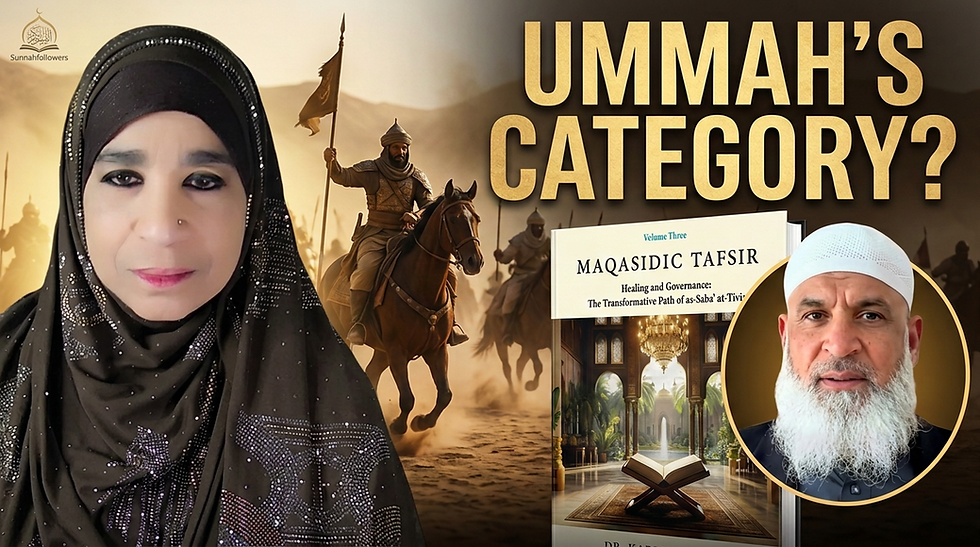
Drawing on Ustadah Laila Nasheeba’s insights from Dr. Karim Abuzaid's The Maqasidic Tafsir Vol. 3, this post explores how Surah at-Tawbah helps us understand the dynamics of the Ummah during a critical period and reflects on its relevance to the present time.
The Context of Surah at-Tawbah in Madinah
Surah at-Tawbah was revealed during a pivotal moment in Islamic history, when the Muslim community in Madinah was consolidating its identity and facing internal and external threats. The Surah addresses the aftermath of broken treaties and the presence of various groups with differing loyalties and commitments to Islam.
The Madinan community was not homogeneous. It included:
Committed Muslims who actively supported the Prophet and the Islamic mission.
Hypocrites (Munafiqun) who outwardly professed Islam but secretly opposed it.
Combatant groups who had previously violated treaties.
Non-combatants who lived among Muslims but did not participate in fighting.
Understanding these groups is essential for grasping the social and political challenges early Muslims faced and how the Surah guided their responses.
Categorization of Groups in the Madinan Community
Surah at-Tawbah provides a nuanced view of the community’s composition. It does not treat all groups the same but distinguishes between their intentions and actions.
Combatant Groups and Treaty Violations
One of the Surah’s main concerns is how to deal with groups that had breached agreements with the Muslim community. These breaches threatened the security and unity of the Ummah. The Surah outlines a firm stance toward these groups, emphasizing accountability and the consequences of breaking trust.
For example, the Surah instructs Muslims to:
Sever ties with those who repeatedly violate treaties.
Defend the community against aggression.
Maintain justice even in conflict.
This approach ensured that the Muslim community could protect itself while upholding ethical standards.
Non-Combatants and Their Role
Non-combatants, including women, children, and those who did not take part in hostilities, are treated differently. The Surah recognizes their distinct status and calls for fair treatment, reflecting the Islamic principle of justice.
This distinction helps maintain social cohesion and prevents collective punishment, which could harm innocent members of society.

The Centrality of Tawheed in Surah at-Tawbah
Beyond social categorization, Surah at-Tawbah strongly reiterates the importance of Tawheed, the oneness of Allah. This principle is the foundation of Islamic belief and practice.
Tawheed as the Core of Faith
The Surah calls on all people to align their actions with Allah’s will. It stresses that true faith requires not only verbal declaration but also consistent behavior that reflects submission to Allah alone.
Key points include:
Rejecting all forms of shirk (associating partners with Allah).
Demonstrating sincerity in worship and daily conduct.
Upholding justice and truth as manifestations of faith.
By emphasizing Tawheed, the Surah links belief directly to ethical behavior, making faith a lived reality.
Behavioral Expectations from Tawheed
Surah at-Tawbah outlines how Tawheed shapes community life:
Loyalty to Allah takes precedence over tribal or personal loyalties.
Believers must stand firm against hypocrisy and betrayal.
Unity in faith leads to unity in action and purpose.
This framework helped the early Muslims navigate complex social dynamics and remains relevant for believers today.
Lessons from Surah at-Tawbah for Today’s Ummah
The period of the second ghurbah (a time of estrangement or hardship for Muslims) shares similarities with the challenges faced by the Madinan community. Surah at-Tawbah offers guidance on understanding and responding to these challenges.
Recognizing Our Own Community Dynamics
Just as the early Muslims had diverse groups with varying levels of commitment, today’s Ummah also contains a range of attitudes and behaviors. Reflecting on the Surah encourages:
Awareness of internal divisions.
Patience and wisdom in dealing with differences.
Commitment to the core principles of Islam.
Upholding Tawheed in Daily Life
The Surah’s emphasis on Tawheed reminds believers to:
Center their lives on the oneness of Allah.
Avoid compromises that dilute faith.
Act with integrity and sincerity.
This focus strengthens individual and collective faith, helping the Ummah navigate modern challenges.
Practical Applications of Surah at-Tawbah’s Teachings
Understanding the Surah’s message can lead to practical steps for Muslims today:
Community Building: Foster unity by recognizing and respecting different roles within the community while holding firm to shared beliefs.
Conflict Resolution: Address breaches of trust with fairness and firmness, avoiding collective blame.
Personal Faith: Regularly renew commitment to Tawheed through worship, reflection, and ethical conduct.
Social Justice: Treat non-combatants and vulnerable groups with compassion and fairness, reflecting the Surah’s guidance.
These actions help build a strong, resilient Ummah grounded in faith and justice.
Surah at-Tawbah offers a clear and powerful framework for understanding community dynamics and the central role of Tawheed in Islam. Its detailed categorization of groups within the Madinan community and its firm stance on faith and behavior provide timeless lessons. By reflecting on these teachings, Muslims today can strengthen their faith, navigate internal challenges, and contribute to a unified and just community. The Surah’s message remains a vital guide for living a life fully aligned with Allah’s will.
Live Lecture: https://youtube.com/live/vV5Ca3bKs-c


Comments